


Peak seasons used to be pretty predictable. The summer holidays, back-to-school season and year-end holiday rush were never easy to manage, but retailers generally knew what was coming and could forecast demand, schedule labor and build up inventory ahead of time. Hiring extra warehouse and delivery help was also easier because more people were available for seasonal jobs.
Then ecommerce and shopping from home came on the scene. With online sales now making up nearly 17% of all retail sales and increasing by about 10% annually, retailers have to balance fulfillment costs, delivery speed and profitability on every order.
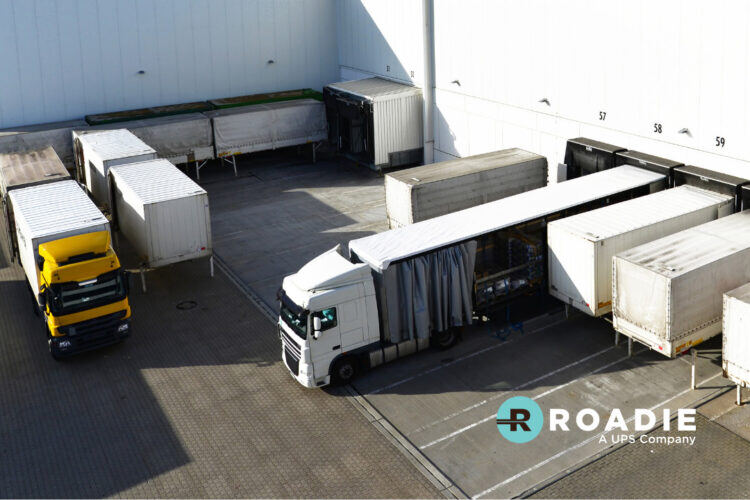
Add a viral TikTok that sends demand for a single product soaring or a winter cold snap that boosts space heater sales through the roof, and retailers can be in for a wild ride. It often starts at the retailer’s warehouse or distribution center loading dock, where many moving parts have to accommodate faster delivery times and sudden changes in order volume.
One peak, two ways to deliver
An order may be as small as a tube of lip balm or as large as a full set of living room furniture — couches, loveseats, tables, and lamps — but it still has to reach the customer on time and at a manageable cost. With customers expecting their orders in less time, the question is: What’s best — Roadie Same Day® or RoadieXD®?
- Roadie Same Day® sends orders directly from a nearby store or other fulfillment point to the customer. The retailer picks, packs and stages the order, then hands it off to a driver for delivery within a specific window. Same day can accommodate urgent purchases, daily order fluctuations and retailers that already have inventory positioned near their customers.
Each delivery is priced according to factors such as distance and item size, and retailers can dispatch orders as they come in or schedule them ahead of time. Roadie Same Day®, for example, offers two-hour, four-hour and end-of-day delivery windows, with no minimum number of deliveries.
- RoadieXD® handles larger volume orders coming from a warehouse or DC. The retailer loads those orders onto a full truckload or less-than-truckload trailer and sends them to a Roadie cross-dock near the delivery area. The orders are unloaded, sorted and transferred directly to outbound vehicles for final delivery rather than sitting in storage or going through another picking process.
By consolidating the long-haul portion of the trip and distributing multiple orders from a single location, retailers can lower handling and warehousing costs while serving a larger delivery area. RoadieXD® accommodates high-volume deliveries of more than 50 items per pickup, with all-in pricing based on size distance, urgency and total delivery volume.
What's the best fit?
The answer usually comes down to inventory positioning and the final destination. A retailer with hundreds of stores and inventory positioned close to customers can use same-day delivery for orders picked and staged locally. The company gets fast access to merchandise that’s already in the market and can absorb peak-season increases without adding permanent delivery capacity.
RoadieXD® is a good fit for retailers that carry most of their inventory in regional DCs or send a steady volume of orders into the same markets. Rather than send merchandise to a store, stock it, pick it again and stage it for delivery, retailers can send customer orders from the DC to a cross-dock near the destination market. The orders are sorted there and handed off for final delivery. This eliminates several handling steps and frees up warehouse and store space.
Finding the perfect combination
The good news is that you don’t have to choose one over the other. Blending same-day and cross-dock delivery provides the best coverage, especially during peak periods when order sizes, inventory locations and delivery deadlines can vary from one customer (or day) to the next.
Consider a home improvement chain that’s heading into the first warm weekend of spring. One customer orders a box of sprinkler heads from a nearby store and needs same-day delivery for a project that’s already underway. Another customer orders a grill, patio table and six chairs that are stocked at the regional DC. In this scenario, the smaller order can leave directly from the store, while the furniture travels with a larger batch of customer orders to a Roadie cross-dock and then goes out for final delivery.
Roadie Same Day® takes care of urgent orders leaving nearby stores, while cross-docking handles concentrated volume coming from DCs without sending every item through a store first. It’s the best of both worlds for busy retailers that have to handle sudden demand spikes without building a separate delivery setup for every type of order.
One network, two delivery options
More delivery choices don’t have to create more headaches. With Roadie, retailers can manage both models through one crowdsourced delivery provider. Roadie Same Day® and RoadieXD® handle different types of orders through the same delivery network, from urgent store deliveries to higher-volume deliveries coming out of a DC.
The Roadie network includes more than 310,000 independent drivers with vehicles ranging from sedans to pickup trucks and cargo vans. Retailers can send everything from small items to items weighing up to 200 pounds and measuring as long as 12 feet. And because the crowdsourced delivery platform reaches up to 97% of U.S. households, companies can reach areas where they have no stores, drivers or local carrier relationships.
With Roadie Same Day® grouping up to batch orders per driver, retailers can handle a busy day without dispatching every order separately. Delivery windows can extend into evenings, weekends and holidays, leaving more room to accept late orders during peak periods.
Both solutions include real-time tracking, upfront pricing and application programming interface (API) connections that companies can add to their existing order systems. Customers and retailers can follow the delivery from pickup through arrival.
For retailers weighing the same-day delivery vs. cross-docking decision, the best answer may be one, the other or some combination of the two. And remember that the right choice can change with the order, the destination or whatever peak demand throws at you that day.